Bank of America’s commercial banking organization (spanning middle-market and corporate) managed client relationships across more than 10 lines, each working through different systems with no shared view of the client.
At Fjord, I led the project as a coach-player. We brought leaders from across those business lines into one research and design process, turning their disconnected perspectives into four prioritized scenarios for a new version of their product, IRIS.
One client, more than 10 versions of the relationship
Relationship managers and bankers used different methods and systems. A deal in one line of business could be invisible to another group serving the same client.
The brief was to develop high-level concepts for a client 360° experience. But that phrase was still an abstraction. The service crossed business lines, roles, systems, and handoffs; the interface was only where some of those relationships would become visible. Before anyone could design the platform, the bank needed a shared understanding of what bankers were actually trying to do across those organizational boundaries.
The organization was hiding a single client relationship
We conducted more than 20 interviews across users and stakeholders. For the first time, leaders from the different lines of business were brought into the same body of research. That let us compare how different groups understood the same client relationship, where information broke down between them, and what a shared model would need to support.
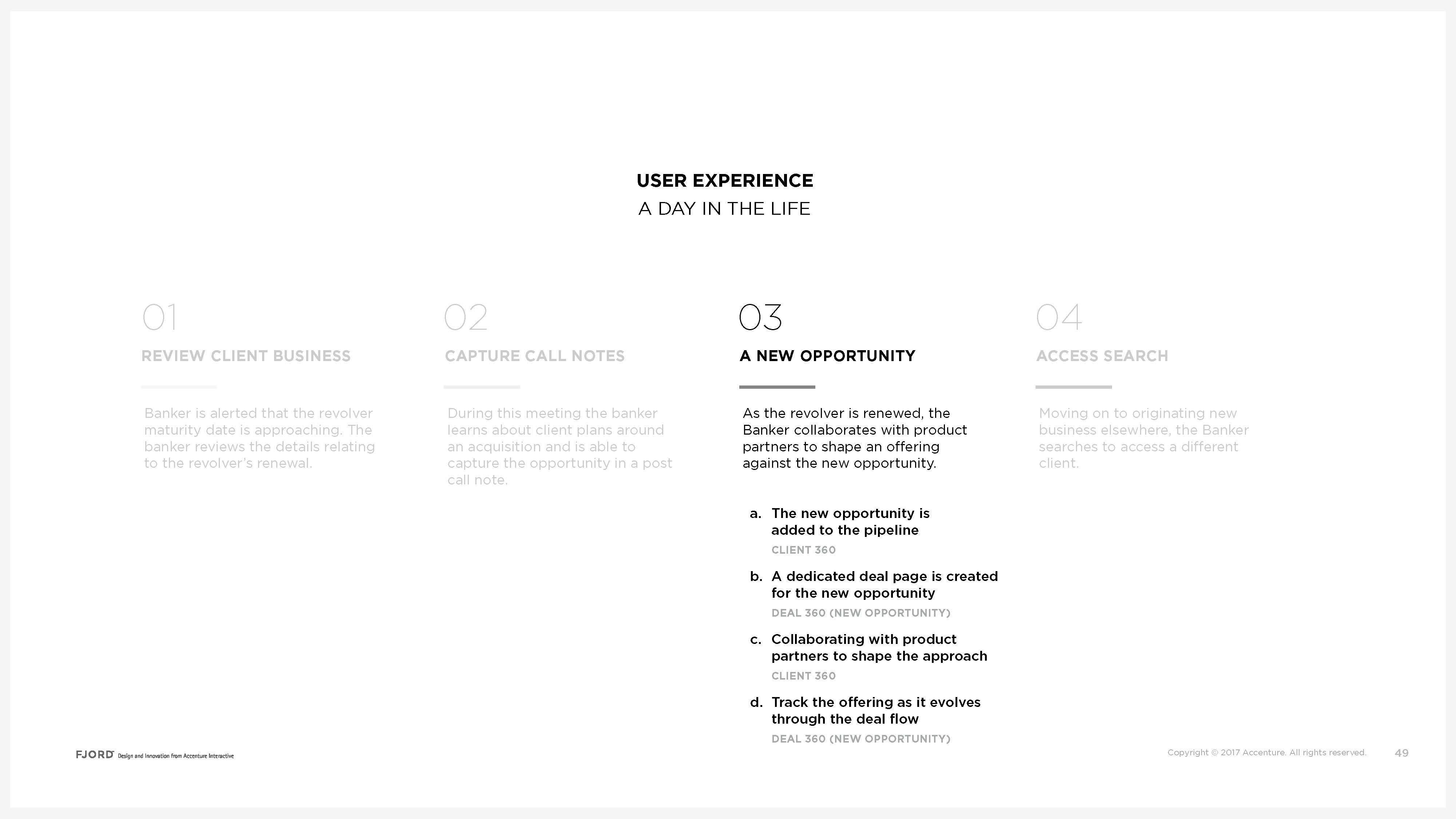
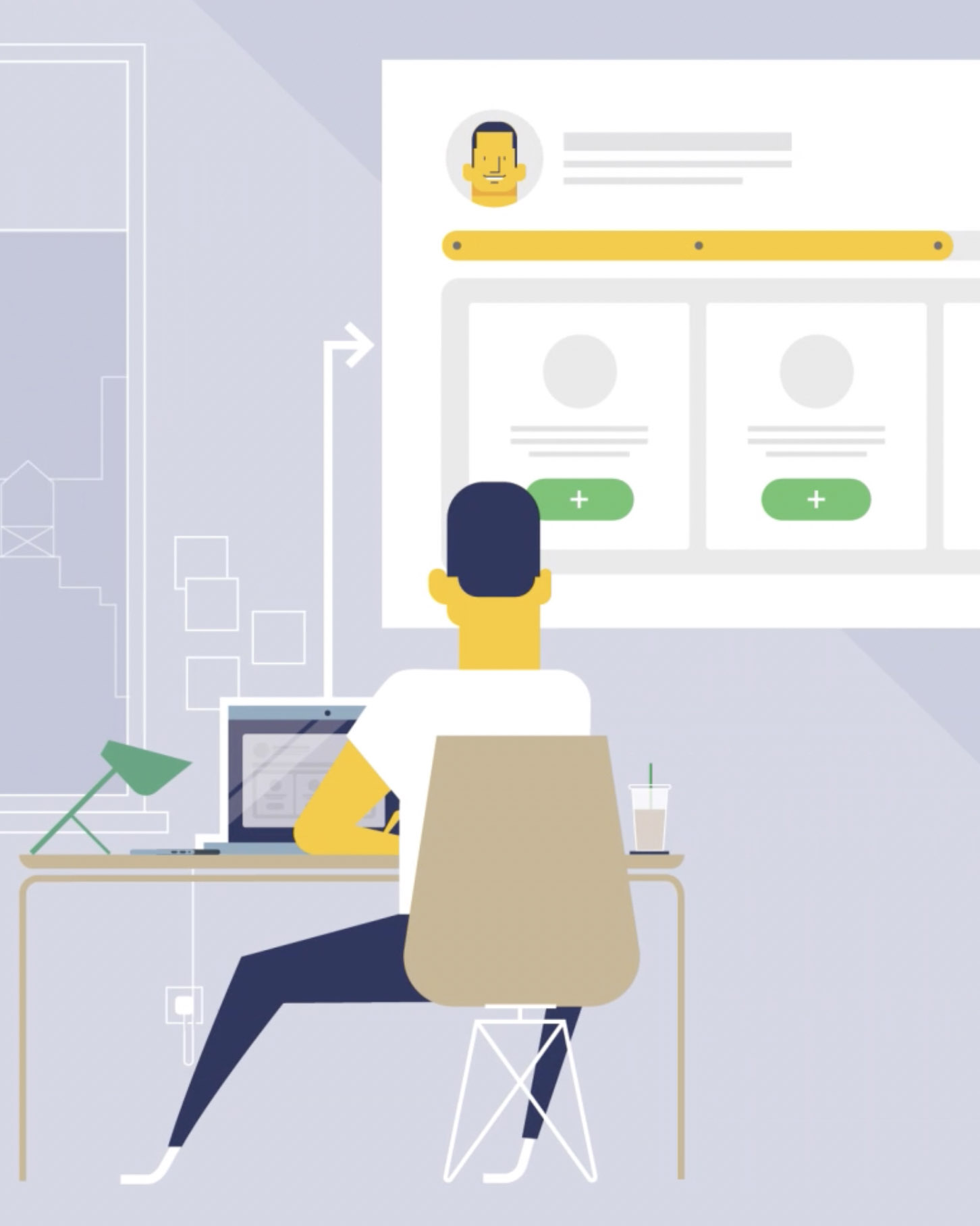
The new-opportunity scenario followed a pursuit from discovery through collaboration and an evolving deal.
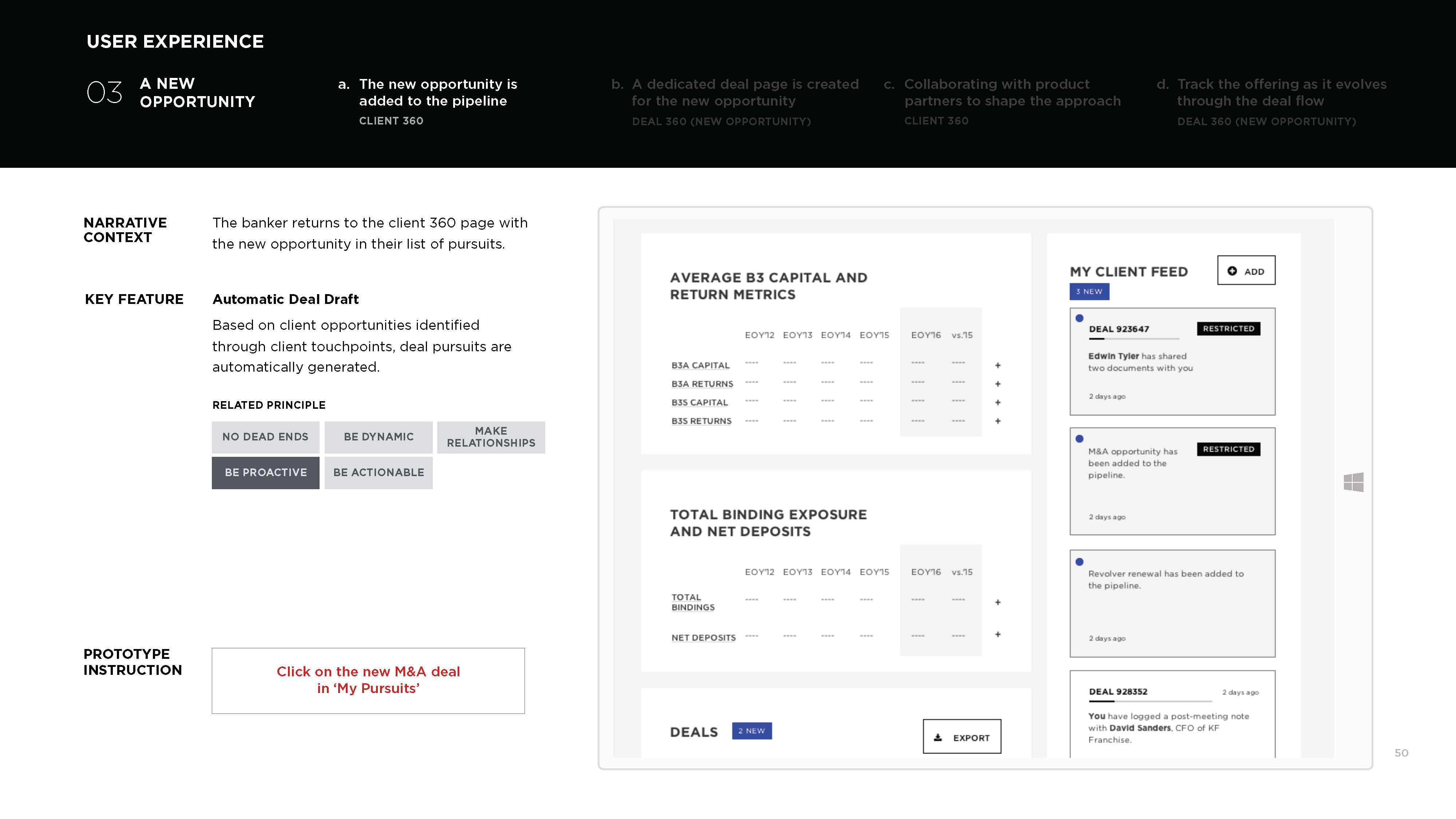
A client signal automatically created a draft pursuit in the shared pipeline.
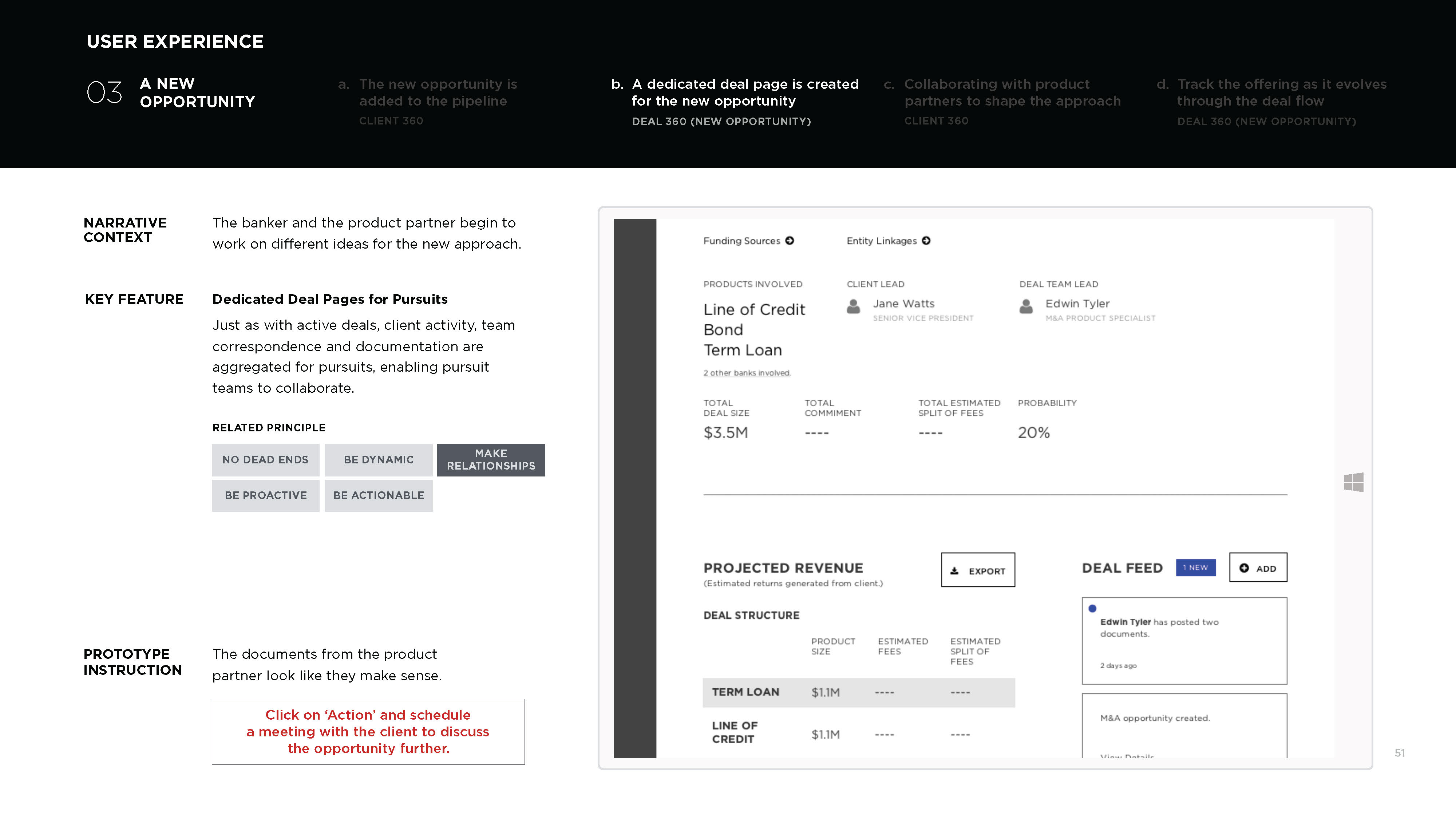
A dedicated Deal 360 page brought the pursuit, people, documents, and projected revenue together.
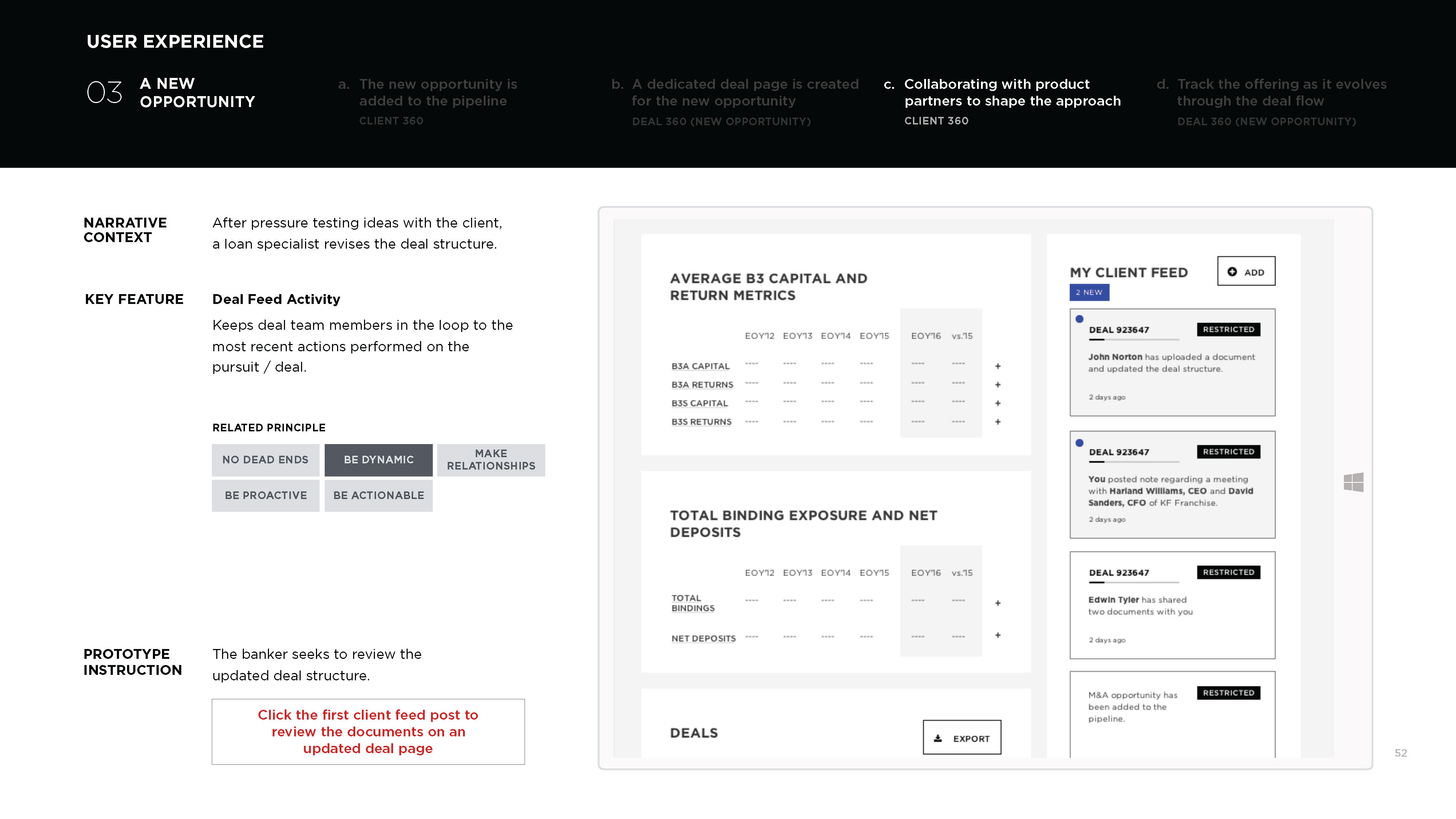
Client-feed activity kept the deal team current as specialists revised the structure.
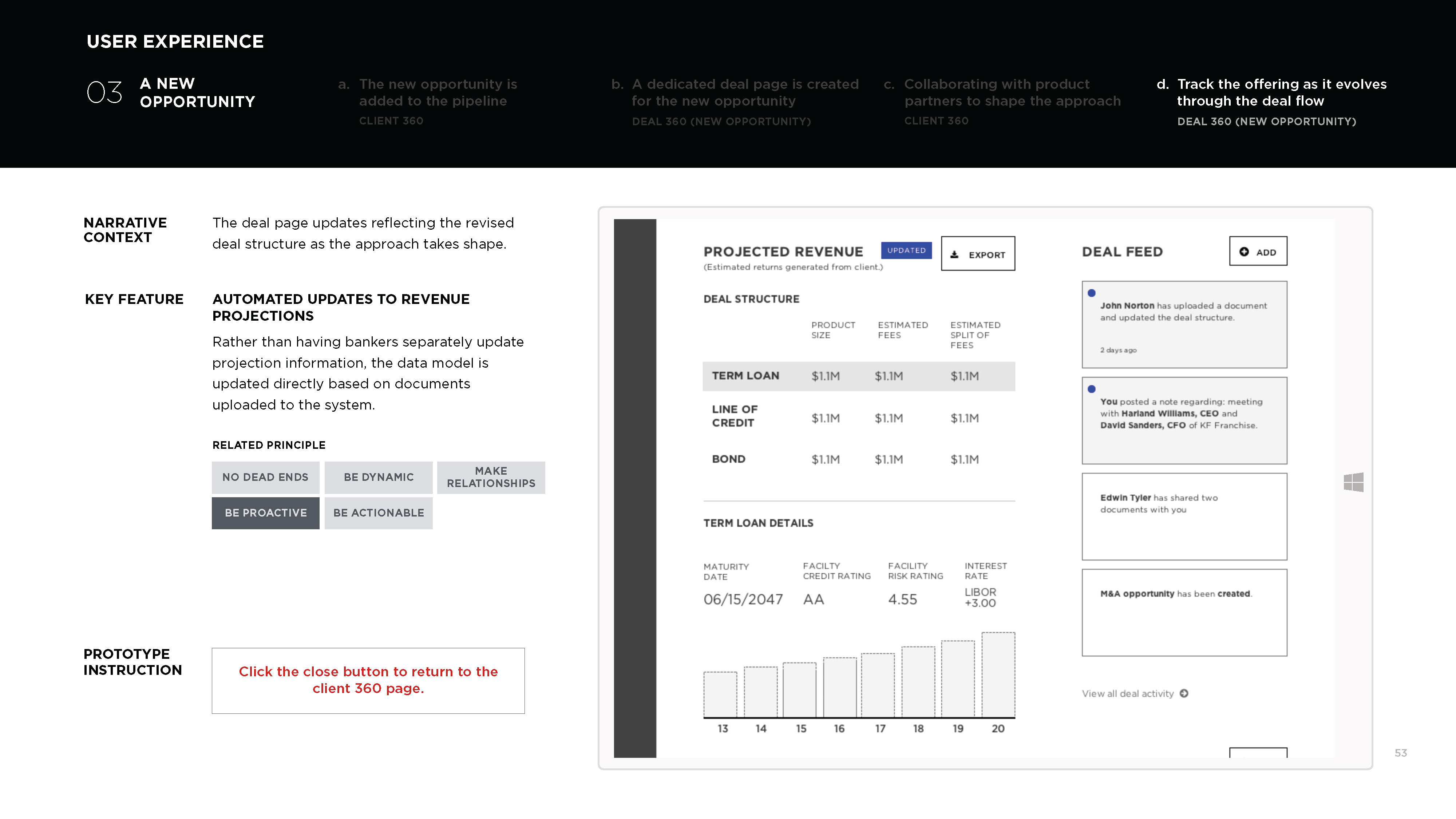
The deal model updated revenue projections as new documents and terms entered the system.
We turned the research into four scenarios that modeled how work moved across people, systems, and moments in the client relationship:
Review a client’s business and relationship with the bank
Capture and retrieve call notes
Identify and develop a new opportunity
Search across clients, accounts, and activity
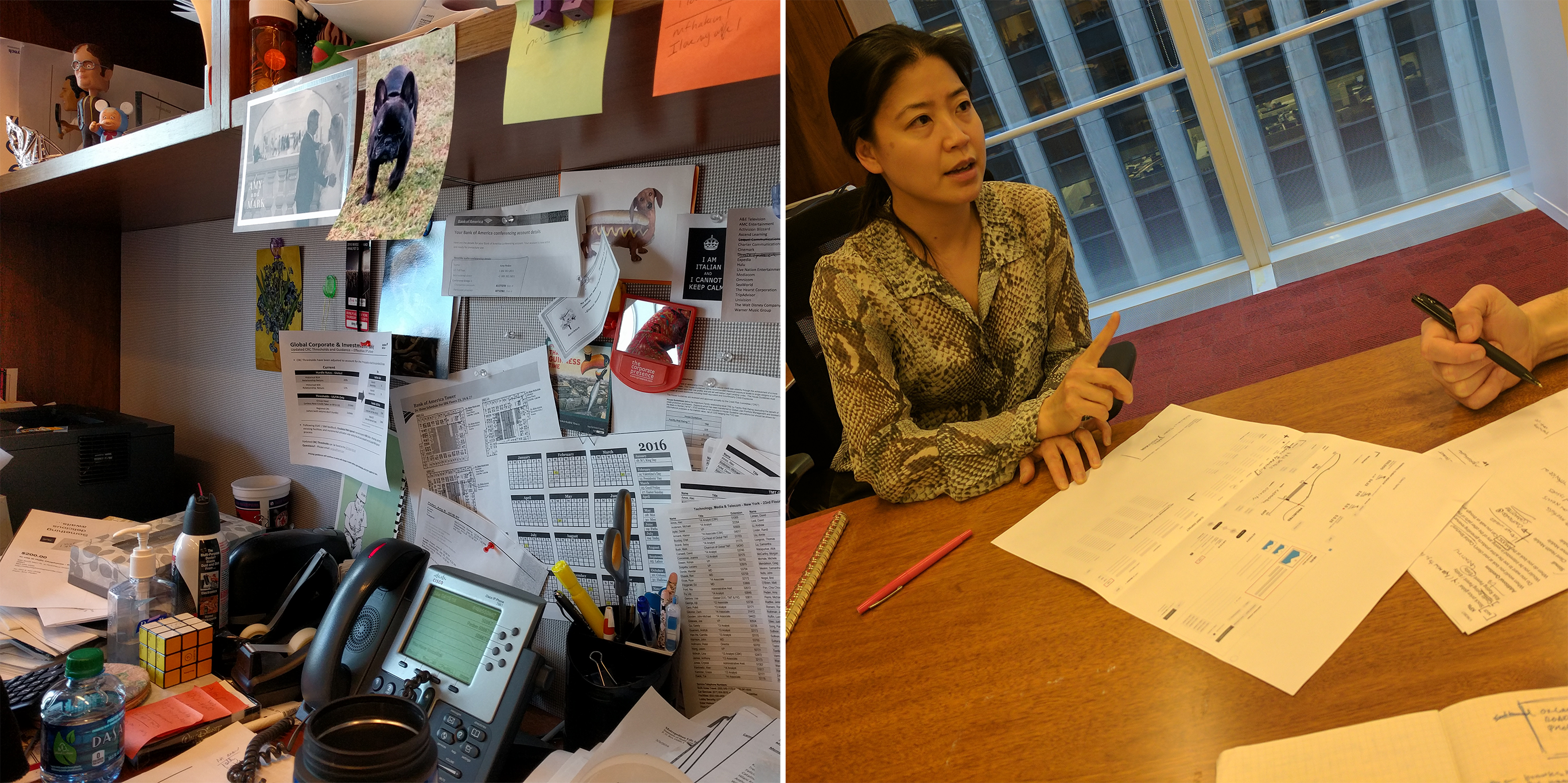
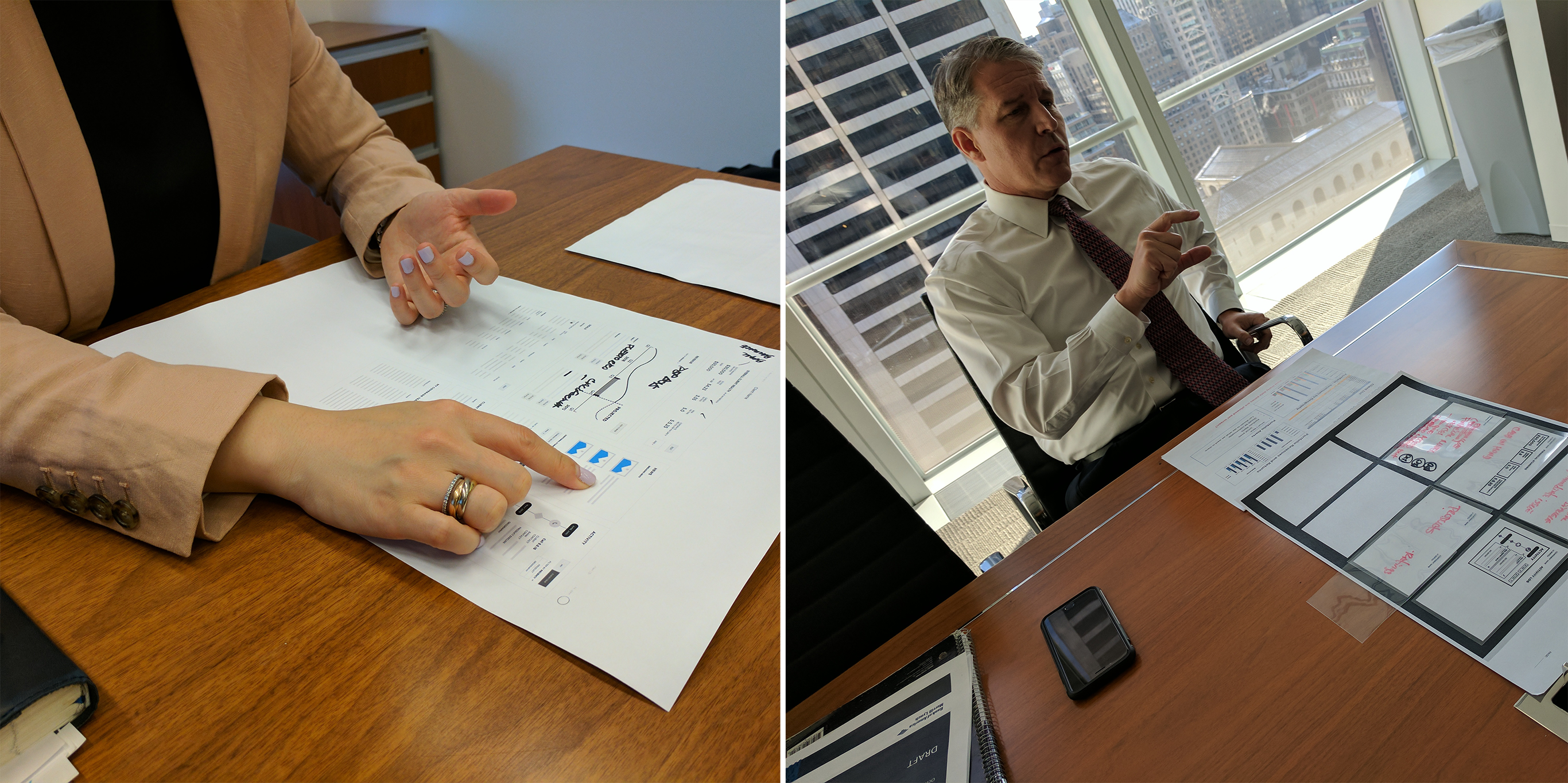
We visited bankers in their offices to see the tools, documents, and workarounds surrounding the existing systems.
Bankers marked up concepts and moved transparent components while explaining how client and deal work actually unfolded.
By the end, “client 360°” finally meant something specific enough to design.
Build the product with bankers in the room
Across more than 12 validation sessions, we used whiteboards, digital mockups, and paper prototypes made from transparent overlays. We could assemble, move, and revise parts of the experience live as a banker explained the work.
That made the prototype a working model of the service relationship, not a fixed interface shown after the important decisions had already been made. The sessions let bankers and stakeholders work through how information, responsibilities, and decisions should move across the relationship while we changed the model in front of them. What survived those sessions moved directly into annotated wireframes, visual designs for Microsoft Surface Pro, and a starting design library.
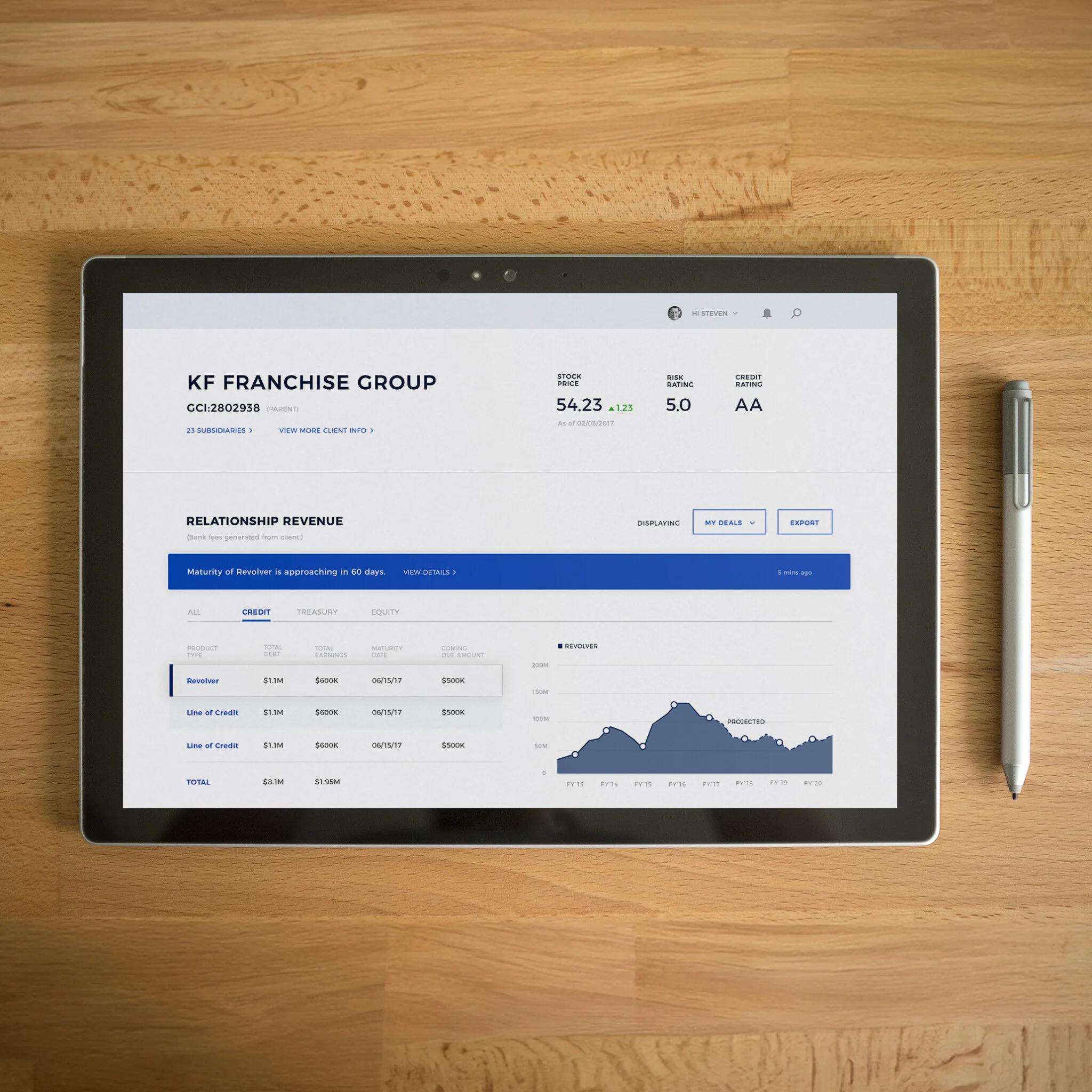
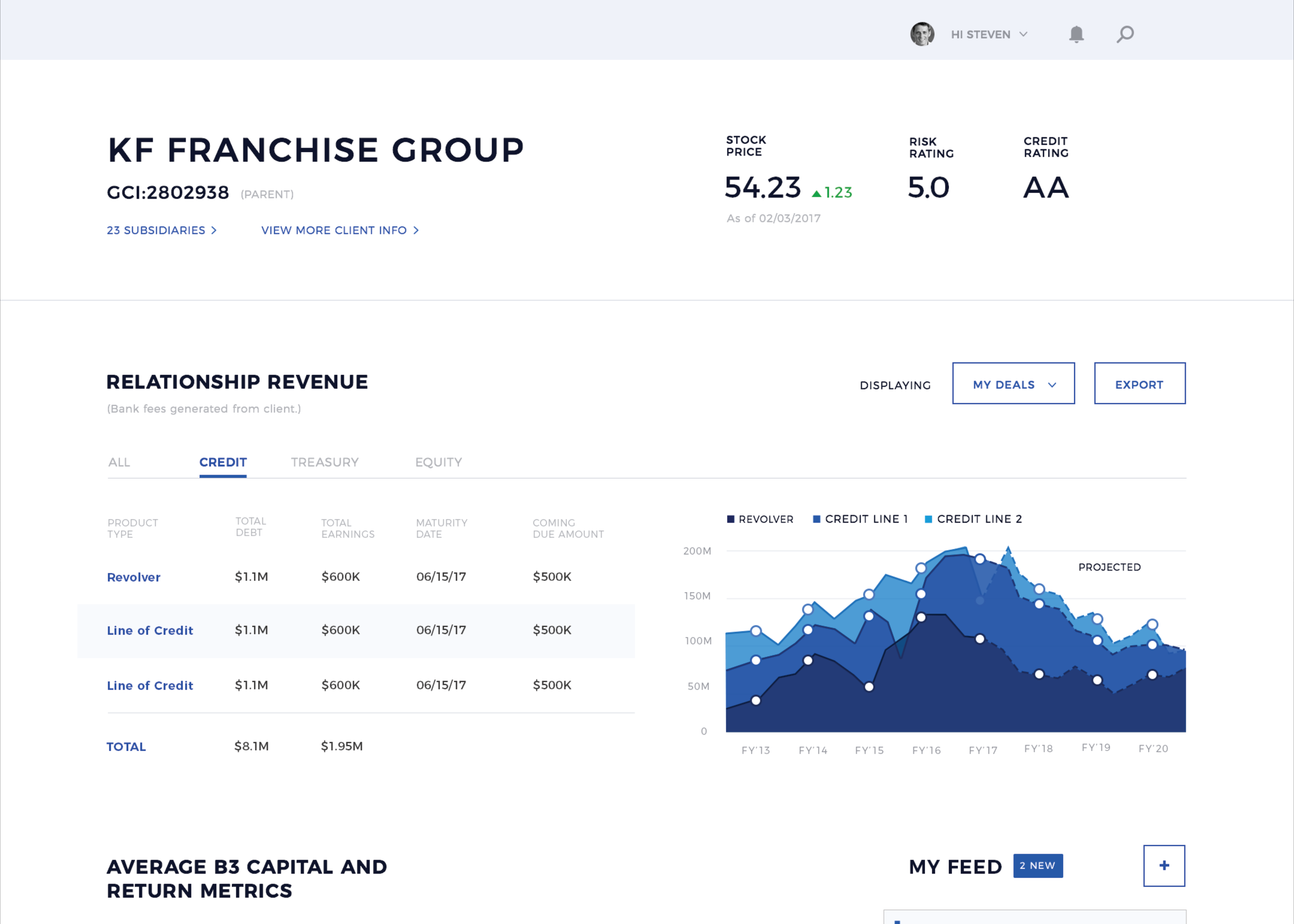
The client 360 view brought relationship revenue, risk, products, and activity into one place.
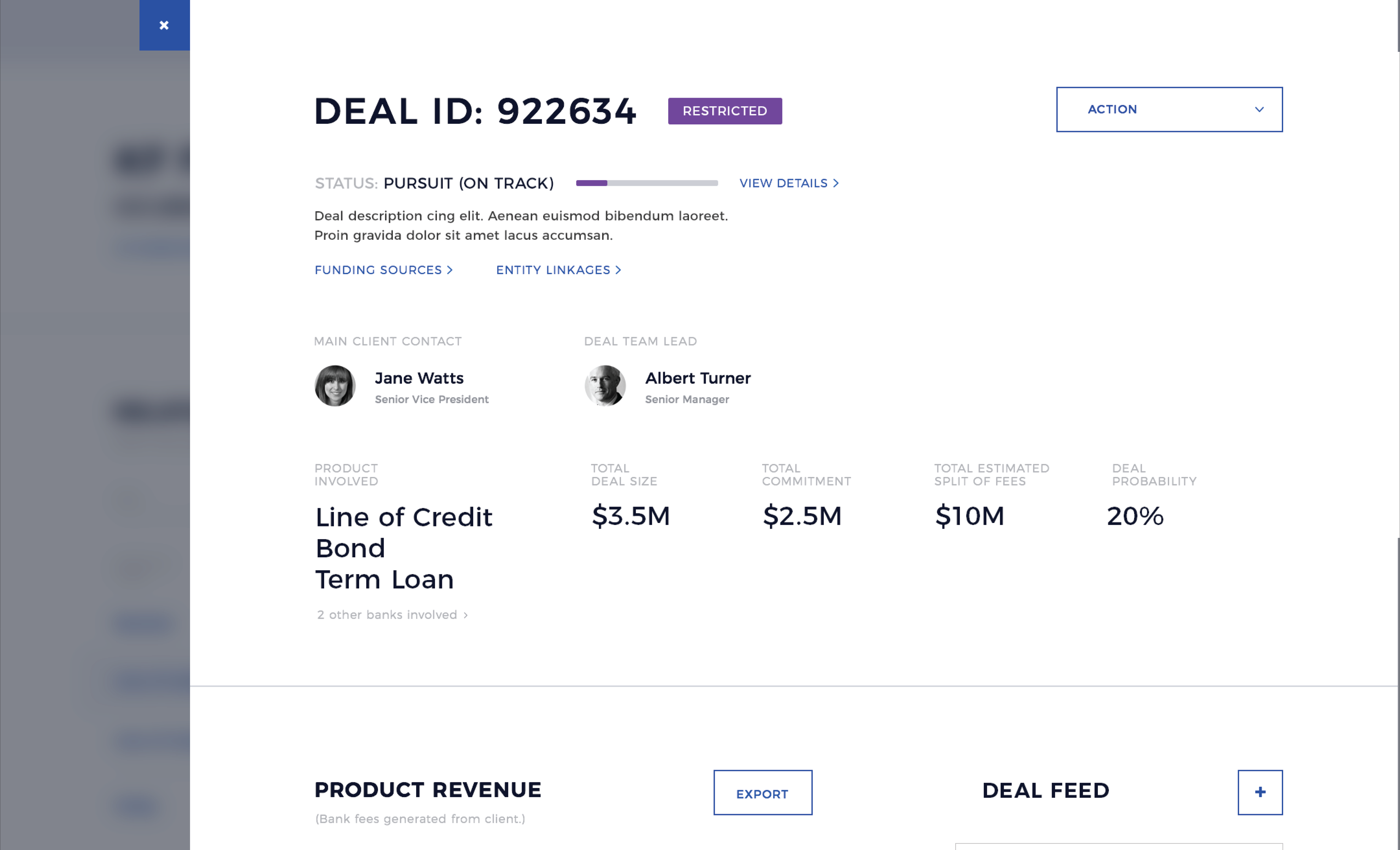
The Deal 360 view kept the pursuit, team, products, probability, revenue, and activity together.
What I led
I assumed design leadership mid-project, owned the engagement from that point forward, and remained hands-on across:
Research planning, interviews, and stakeholder sessions
Live paper prototyping and validation
Scenario definition and prioritization
Product design, team direction, and client presentations
The wider team included three Fjord designers, three client representatives, three Accenture Interactive business analysts, and 12 client stakeholders, including C-level leaders.
A shared model became a product
The scenarios gave leadership, relationship managers, and the product team one shared service model for how a client relationship could work across business lines, then translated that model into something the product could represent.
The work moved beyond concept. About six months after our engagement, a Fjord colleague interviewing at Bank of America saw the product we had designed in active development.
The interface was the result, not the starting point
The hard part wasn’t drawing the interface. It was getting people who owned different pieces of the relationship to see what they needed in the same client record. Like the blind men and the elephant. Once that happened, there was finally something coherent for the product to represent.