Design leadership & practice building · Enterprise consulting · 2021–2024
SoftServe
SoftServe was founded in Lviv, Ukraine in 1993 by two postgraduate Polytechnic students. And by the time I joined in 2021, most of its clients were in the U.S. and Canada, but almost all of its designers were based in Europe.
I joined the global design group as a design director and was promoted first to U.S. lead, then Americas lead as we expanded. I eventually owned hiring, staffing, utilization, management, and career development for a 12-person regional team located up and down the Americas.
Most clients were in the Americas but very few designers were
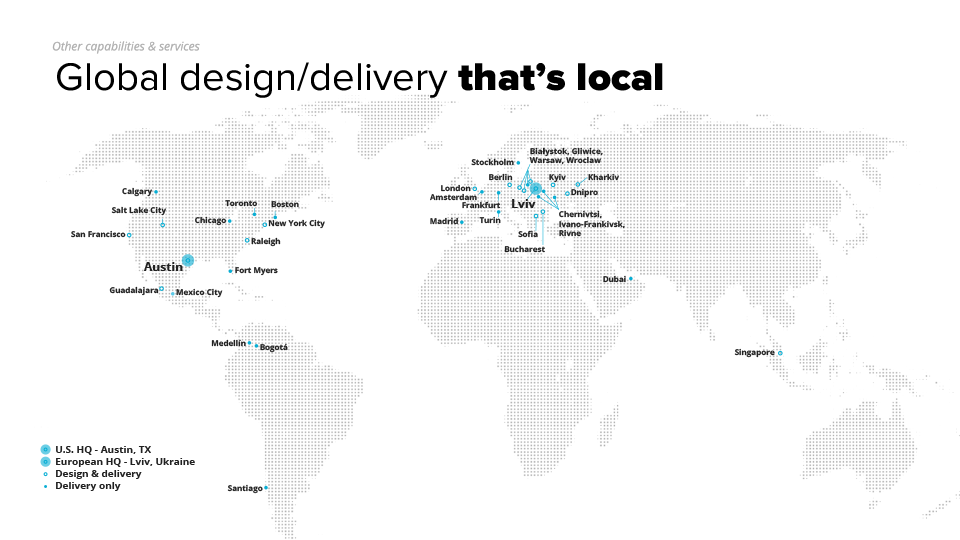
The global design group had 160+ people. Four were in the U.S.; the rest were primarily in Ukraine, Bulgaria, and Poland. And meanwhile, 84% of the company’s clients were in the Americas.
That imbalance became harder to sustain as the client roster grew and demand for design and engineering increased. SoftServe also wanted access to a large technology talent pool closer to North American clients and with less time-zone separation than its European teams.
So the company began expanding delivery capacity into Latin America, including Guadalajara, Medellín, and Chile. Russia’s invasion of Ukraine in 2022 did not create that strategy, but it accelerated the need to diversify where delivery teams were based.
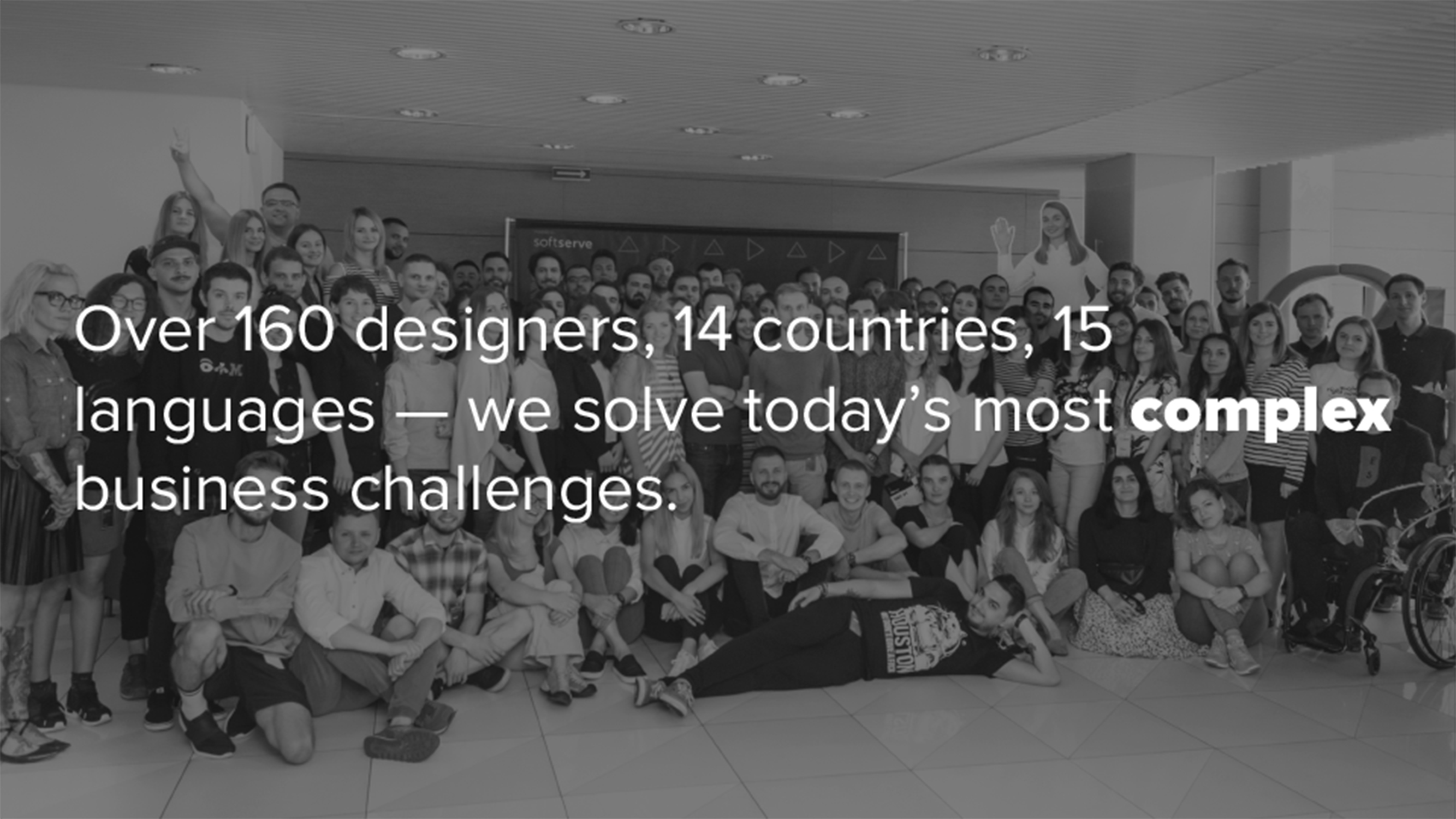
The broader design organization included more than 160 designers across 14 countries and 15 languages.
SoftServe’s global footprint connected growing Americas capacity with established delivery teams across Europe and beyond.
Having the team closer to the work could help (but it wouldn't be enough)
The first hypothesis was straightforward: put more design capacity closer to the clients we were serving.
As the team grew across the U.S., Canada, Mexico, Colombia, and Chile, a second problem became obvious. Geography could improve coverage across the working day, but it did not automatically create trust, communication, or a shared way of working.
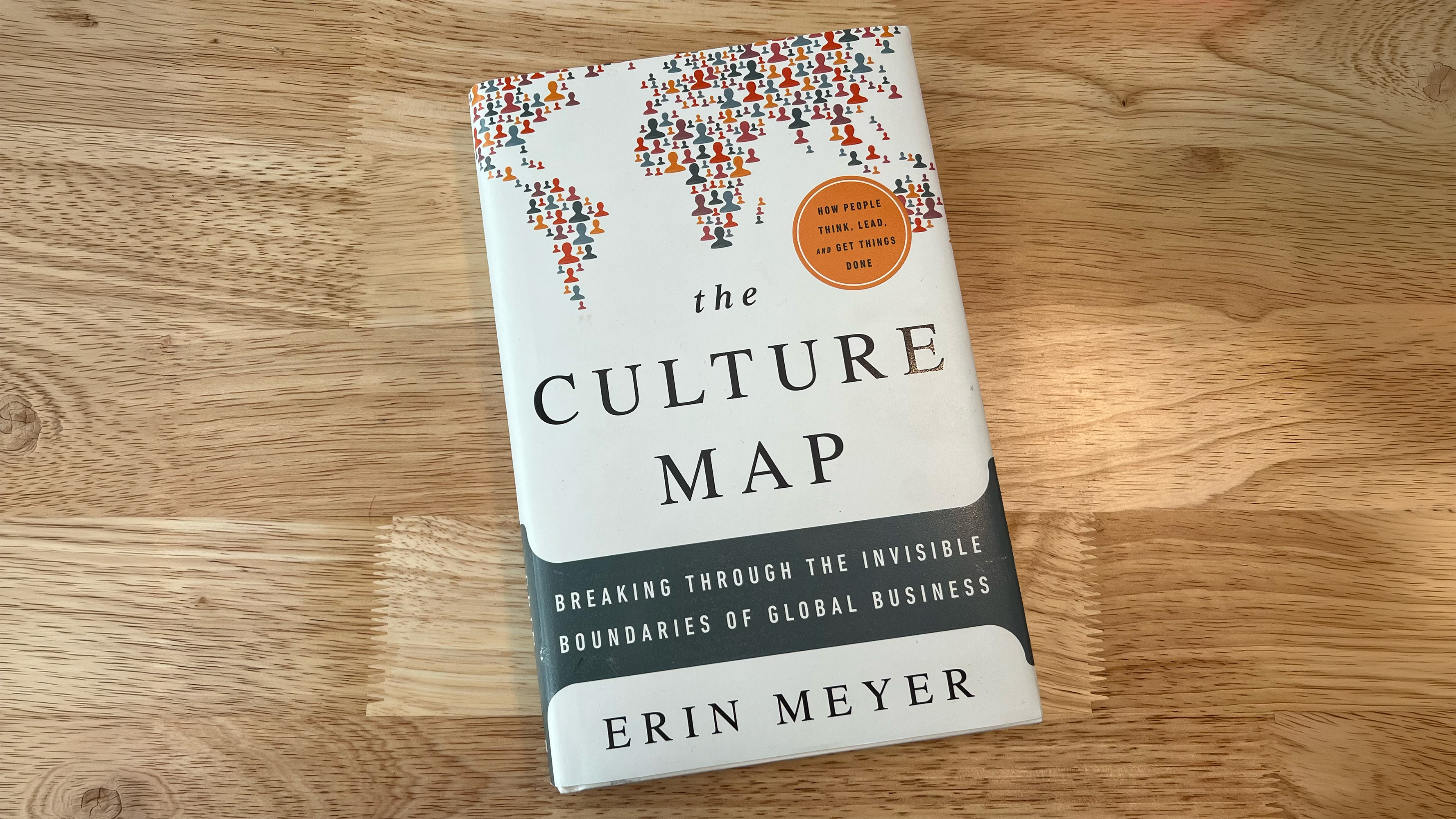
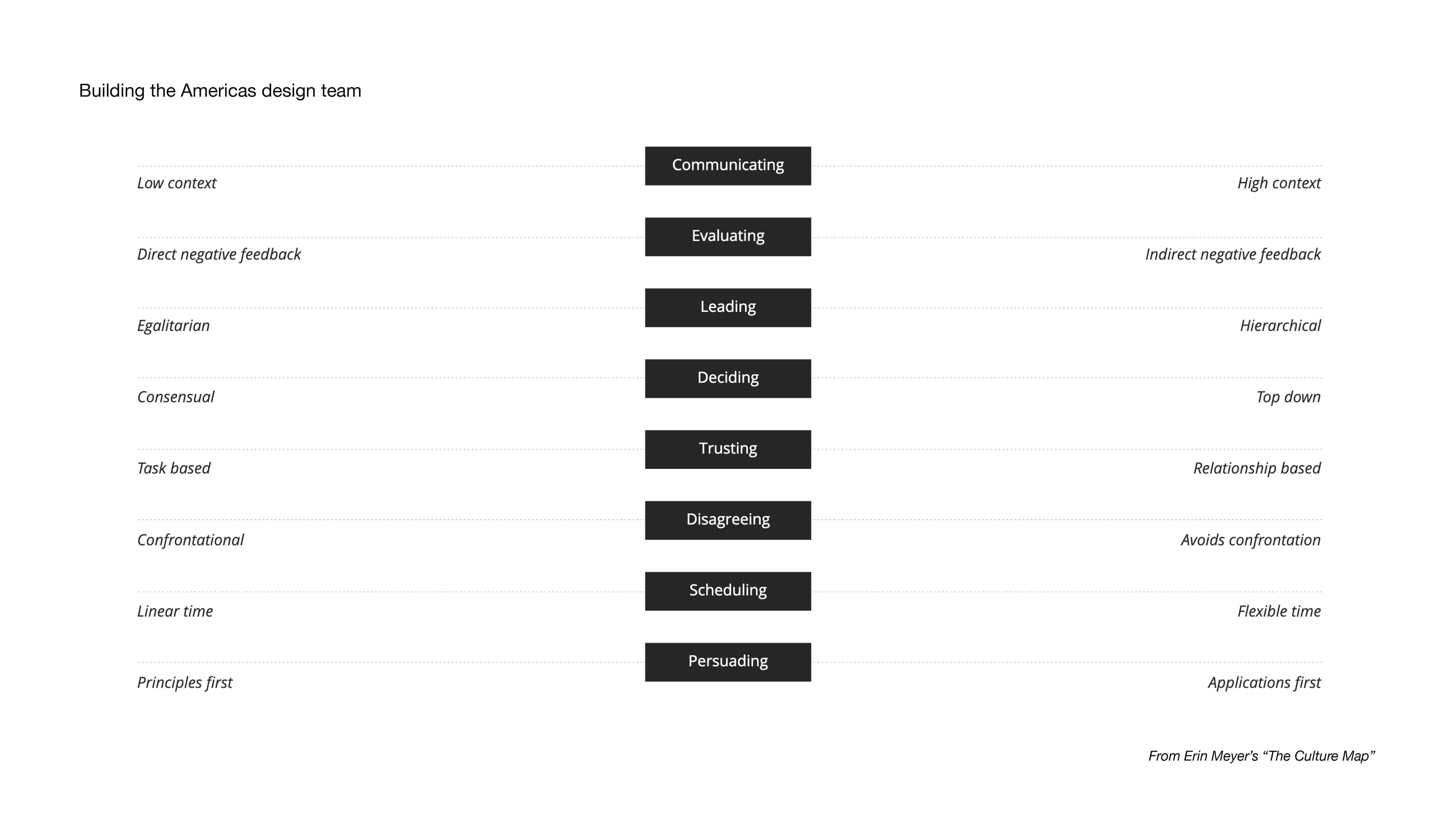
Because the team was fully remote and spread across five countries, we needed a way to connect. Erin Meyer’s The Culture Map was a useful starting point for understanding some of the cultural differences in communication, what feedback worked well, and ways to deepen trust.
Early on, we used lightweight activities such as PechaKucha presentations, 10-song mixtapes, and family/pet intros to help people know one another beyond project work.
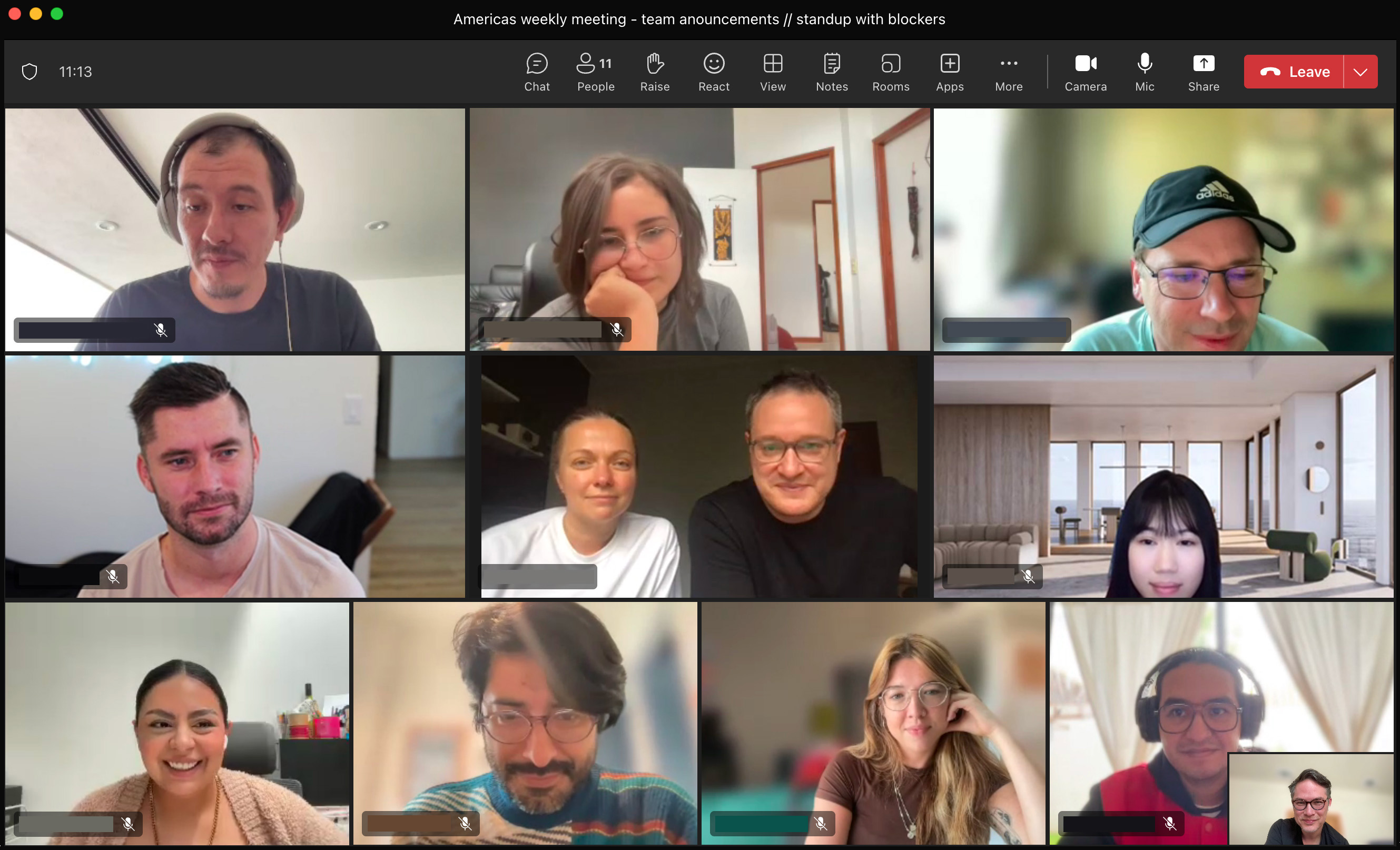
As the team approached a dozen people, I expected our meetings would become more tactical with occasional drops into what was happening outside the camera frame. But the team gave us a better signal: they wanted less project reporting in weekly calls and more time to connect and sink in with each other.
So we moved the status reporting out of the meeting. If we were going to get 12 people across five countries on a call, we might as well use the time for something Slack couldn’t do.
Build the team, then change how we worked
I worked with country leaders as well as global design and cross-functional leadership on where to hire and how to staff the new capacity.
SoftServe already had a rigorous hiring process covering communication and follow-through, portfolio quality, collaboration, problem-solving, and interview performance. But when helpful, we involved the broader team and brought Spanish-speaking colleagues into later-round interviews so candidates had more ways to show how they worked. We even started an internship class with a group of five student designers.
At the same time, we shifted our own cadences and rhythms. Routine project updates moved to a twice-monthly Teams post. Weekly calls shifted away from status reporting and toward conversations, activities, book clubs, games, baking, and other ways of spending time together. And leadership of those meetings was handed off across the team.
My role expanded with the organization, the management piece was there too: headcount plan, seven hires, 12 people across five countries, two managers, staffing, utilization, performance, careers. All of it.
I first encountered The Culture Map when I was at Fjord and working with multi-national teams there, super helpful.
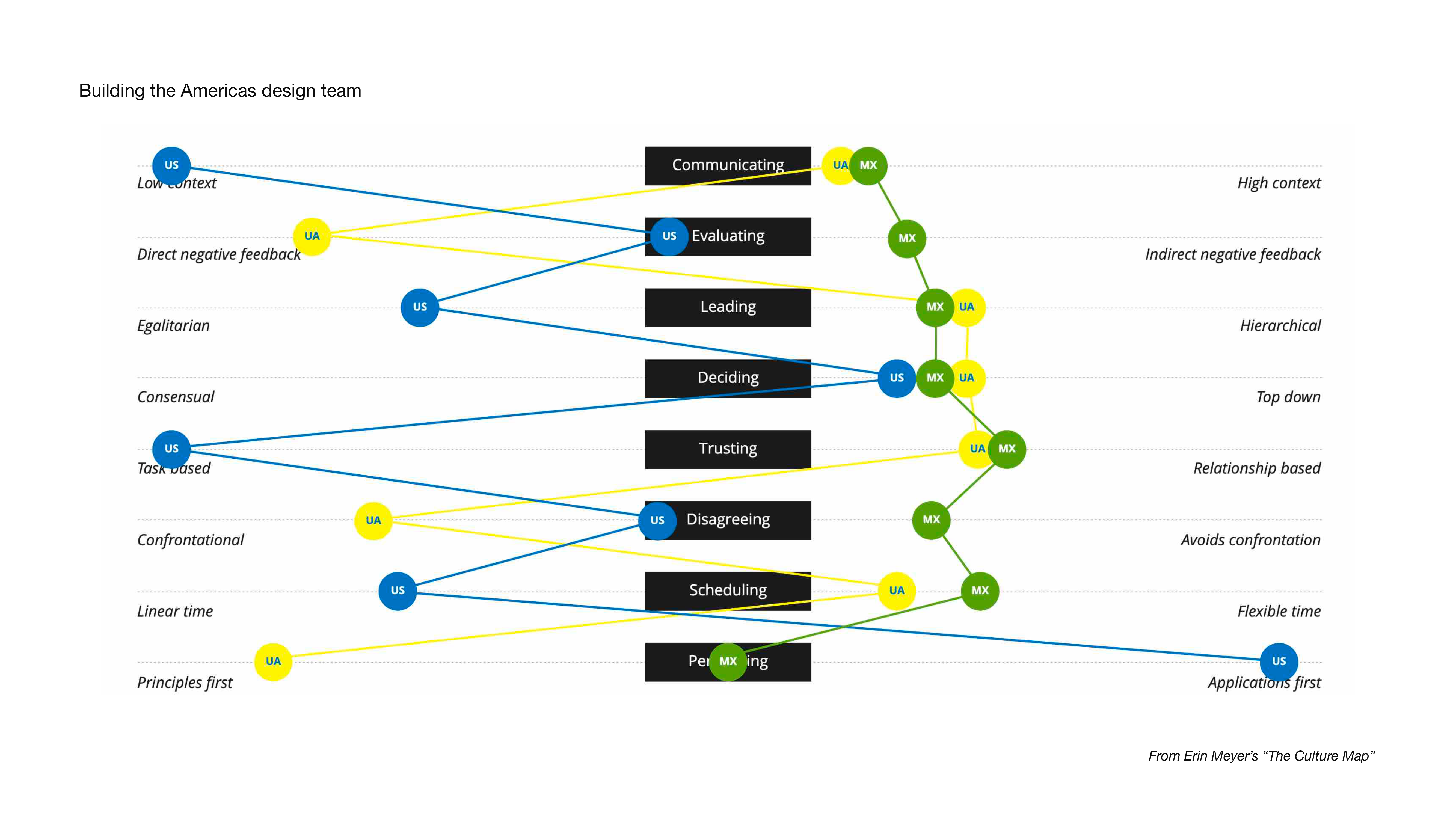
The Culture Map gave us a starting vocabulary for discussing different ways of communicating and building trust.
We used the framework to compare some of the countries represented on the team.
And the team delivered
Over two years, we were able to maintain 80%+ utilization, generated $2.1M in billable work, and staffed about 15 projects, usually with one designer and occasionally 2–3.
The regional capacity reduced reliance on European teams for work in the Americas and gave colleagues better coverage across the working day. At least one teammate was promoted and everyone was still on the team when I left.
Those results mattered because it showed that the organization was not simply adding headcount. The team was being staffed, retained, and used productively.
Shortly before I left, several direct reports also reached out to thank me for the time and energy I'd put into team building efforts and group bonding, which meant so much to me.
The team grew and how we managed it changed too
When I left, we had a 12-person group that could staff Americas work and support one another across countries and time zones.
Hiring and utilization were part of the job, but not the whole job. As the team grew, management shifted from simply increasing capacity and capability to creating the conditions for people to communicate, develop, and work together effectively.
Adding people was the part easy-to-measure. The harder job was changing how the team worked as it got bigger.
Most of the team had never met face-to-face, so the way we used time together mattered.